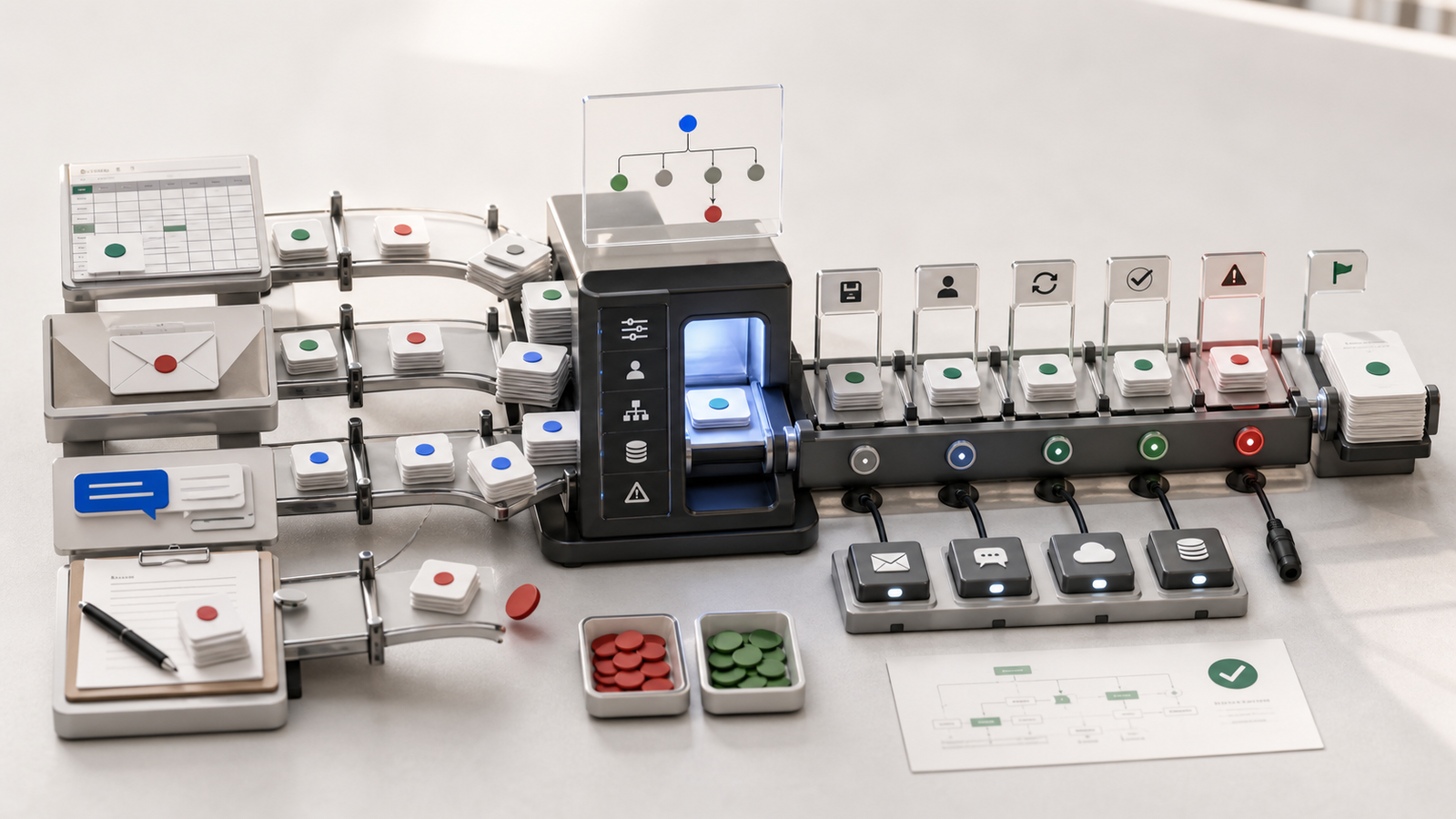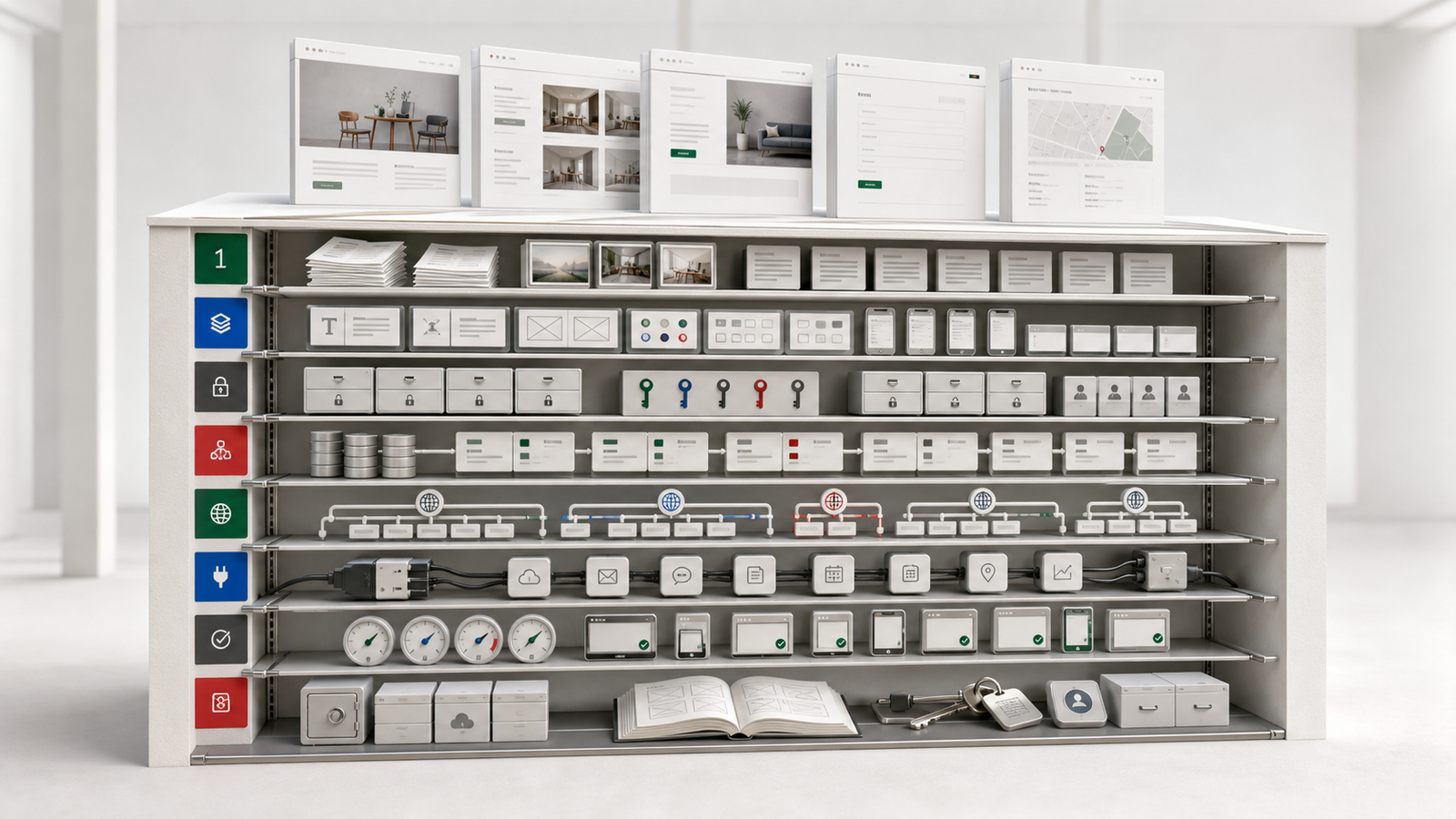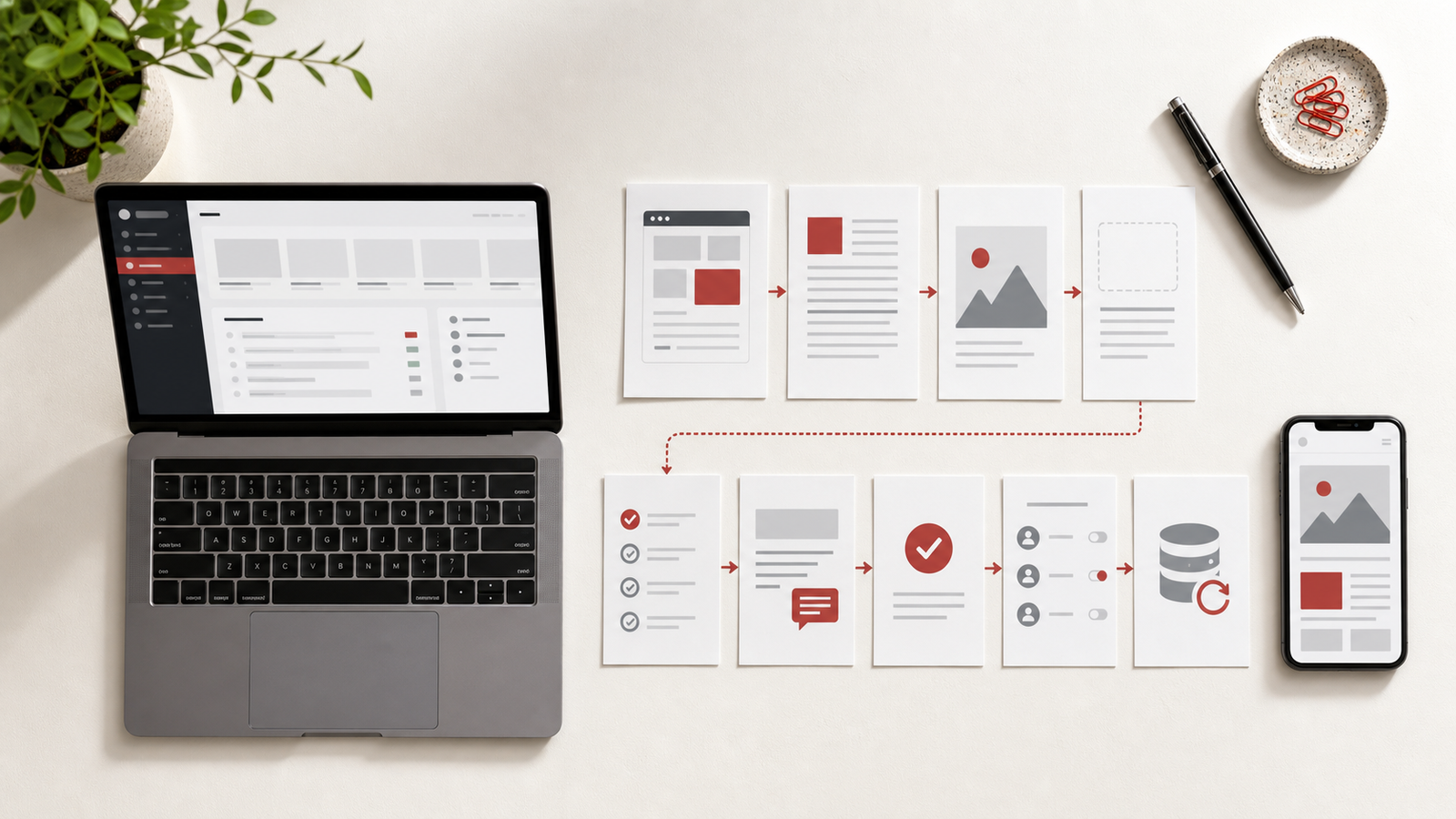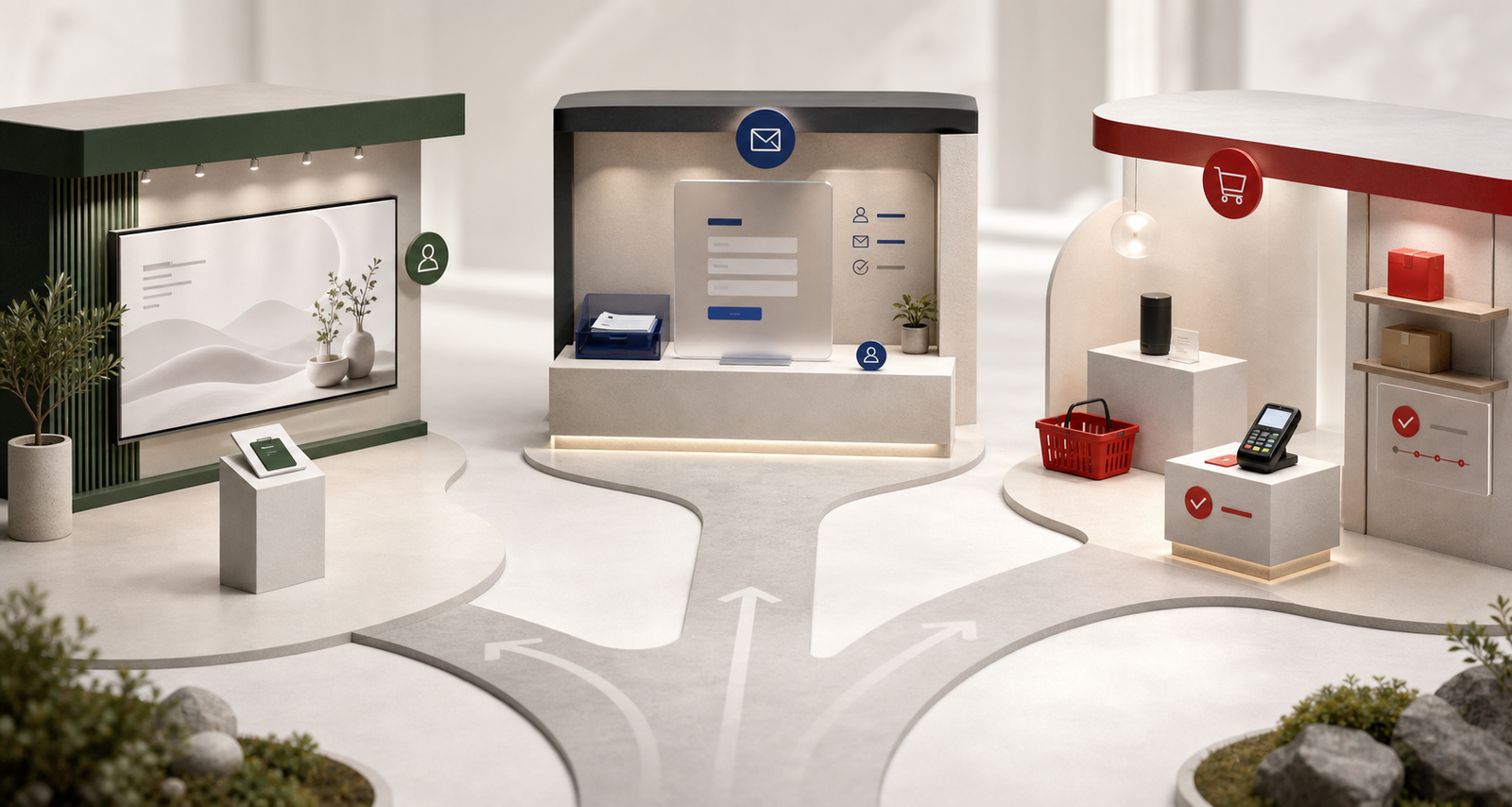
The main difference between a brand website, a business website and an e-commerce website is not how many pages each one contains. It is the action the website must help a visitor complete and the information the business must manage afterwards. A brand website builds understanding and trust. A business website supports enquiries, leads or content operations. An e-commerce website manages products, payments, orders and fulfilment. Defining the operational workflow first is usually more reliable than choosing a template first.
A website type is not a fixed product label. It is a set of operational requirements.
Two company websites may look similar while doing very different work. One only needs to explain a service clearly. Another must route detailed enquiries to a sales team. A third must confirm payment, reduce stock and notify fulfilment. Describing all three as a “five-page website” hides the data, permissions and responsibilities that determine whether the system can be operated after launch.
The three website types at a glance
| Area | Brand website | Business website | E-commerce website |
|---|---|---|---|
| Primary purpose | Build recognition and trust | Generate and manage commercial actions | Complete and manage online purchases |
| Main visitor action | Read, understand and contact | Enquire, book, apply, download or register | Select, add to basket, pay and track an order |
| Typical content | Brand, services, work and contact details | Services, insights, forms, resources and lead entry points | Products, options, prices, stock, payments and delivery |
| Administration | Optional light content management | Usually requires a CMS, lead records and roles | Requires product, order, payment and fulfilment management |
| Data complexity | Low to medium | Medium | Medium to high |
| Daily owners | Brand, marketing or website owner | Marketing, sales, support and administrators | Merchandising, support, fulfilment, finance and administrators |
| Post-launch priority | Accurate content and consistent presentation | Reliable lead handling and maintainable content | Correct orders, payment status, stock and exception handling |
This comparison is a starting point, not a rigid classification. Many organisations need a combined structure: a strong brand experience with articles, structured enquiries and a focused ordering workflow. Others should launch a business website first and add transactions only after products and internal responsibilities are ready.
What is a brand website?
A brand website helps a visitor understand who the organisation is, what it offers, who it is for and what to do next. Its value comes primarily from clear communication and trust rather than a complex transaction.
Common elements include:
- Brand positioning, story and working approach.
- Clear service or product-range introductions.
- Selected work, environments, teams or processes.
- Contact details, social links, locations or a simple form.
- A consistent experience across mobile, desktop and social sharing.
A brand website suits a company that needs a credible digital presence while sales still happen through conversations, proposals or an offline service. It should not be used to hide unresolved positioning. If the audience, offer and next step are unclear, adding visual effects will not solve the underlying problem.
What is a business website?
A business website goes beyond presentation and supports a manageable commercial workflow. That workflow does not have to involve payment. It may cover a detailed enquiry, a booking request, event registration, distributor application, document download, subscription or after-sales request.
Common capabilities include:
- Collecting structured enquiry information for different services.
- Retaining submissions in administration instead of relying only on email.
- Managing articles, work, notices and multilingual content.
- Giving editors, reviewers and publishers different permissions.
- Connecting email, analytics, CRM, booking or operational tools.
- Recording source and status so the team knows what happens next.
This type of site is useful when the business needs a steady flow of qualified leads, regular content publishing or a more reliable process than scattered inboxes and spreadsheets. Its success depends on what happens after a visitor submits information, not only on the appearance of the form.
What is an e-commerce website?
An e-commerce website enables a customer to complete a traceable transaction online. The scope extends beyond a basket interface. It must account for product options, price, availability, payment results, order status, notifications, fulfilment, cancellations, refunds and support rules.
Common capabilities include:
- Product categories, variants, prices and stock.
- Basket, discounts and checkout information.
- Payment processing and failed-payment handling.
- Order references, status, notifications and administration lookup.
- Delivery, collection, invoicing or external service integrations.
- Records for cancellation, refund, out-of-stock and support events.
E-commerce is appropriate when products, prices and delivery rules are sufficiently defined and the company has people responsible for orders, support and fulfilment. If every order still requires a custom quotation or eligibility check, a catalogue with a structured enquiry may fit better than a standard checkout.
Answer these seven questions before choosing a label
1. What is the most important next action?
Should the visitor understand the brand, contact sales, request a booking, describe a requirement or pay immediately? A page may contain several links, but the website still needs one clear primary journey.
2. Who handles the information after submission?
Every enquiry, order or booking needs a primary owner, a backup owner, a response target and a way to investigate failures. A front-end form without an internal responsibility is not a complete workflow.
3. Which content changes regularly?
Services, articles, work, products, stock and notices change at different rates. Frequent changes and multiple contributors create a stronger need for content management, roles and review.
4. What information must be managed?
List content, media, customer requirements, products, orders, payment results and stock. The number and relationship of these data types usually reveal more about complexity than the number of public pages.
5. Which external services are involved?
Payment, delivery, email, booking, CRM, accounting and membership services affect implementation, recurring costs and exception handling.
6. Which roles and permissions are required?
A website managed by one person and a website shared by marketing, support, fulfilment and finance should not use the same access model. Customer and order data also require tighter control than public content.
7. What must the first phase achieve?
Separate “the business cannot operate without this” from “we may want this later”. A focused first release with an extensible structure is easier to test and operate than a first version containing every imagined feature.
Four practical scenarios
A professional service needs a credible home
A consultancy, studio, engineering practice or local service may still close work through a conversation. A focused brand website can explain positioning, services and selected work, then provide a reliable contact route. Membership and e-commerce would add work without improving the core journey.
A team must manage different types of enquiries
If visitors choose a service and provide budget, timing and requirements, and different enquiries go to different owners, the scope has moved beyond simple presentation. Structured submission, administration records, status and notifications make it a business website.
A retailer has stable products and fulfilment
When products have defined prices, stock and delivery methods, and the business already has support and fulfilment owners, e-commerce may be appropriate. Planning must include failed payments, unavailable stock, cancellations and refunds, not only the product page.
Brand content and transactions both matter
A food, lifestyle or product brand may need editorial storytelling and online orders. This is not an either-or decision. A brand-led site can include a transaction workflow, with content and commerce delivered in phases according to operational readiness.
Common selection mistakes
- Adding membership because competitors have it, without a member-specific service.
- Building a basket while every price and delivery date still requires manual confirmation.
- Designing public pages without assigning owners for content, enquiries and orders.
- Placing three years of ideas into the first release and making acceptance impossible.
- Comparing page counts while ignoring languages, migration, integrations and testing.
- Sharing one super administrator account across the whole team.
A phased approach can reduce risk
| Phase | Main outcome | Possible scope |
|---|---|---|
| Phase 1 | Establish a clear, launchable core | Brand, services, work, contact or enquiry, basic analytics |
| Phase 2 | Make content and leads manageable | CMS, categories, roles, administration status, notifications and reporting |
| Phase 3 | Integrate transactions or specialised workflows | Products, payments, orders, membership, booking or custom systems |
Phasing does not mean postponing essential work. It means identifying a workflow that produces value independently, while protecting URL, content and data continuity so the next phase does not require a complete rebuild.
Information to prepare before requesting a proposal
- A short introduction to the brand and services.
- Primary audiences and the most important visitor action.
- Content and data that must be managed.
- Owners of enquiries, orders or bookings after submission.
- Required third-party services.
- Features that are essential in the first phase.
- Current website, domain, hosting and content status.
- Expected administrative roles and permissions.
This information helps suppliers compare the same requirements and provides a stronger basis than asking only for a particular number of pages.
Frequently asked questions
Can a brand website have a CMS?
Yes. A brand website may need a light CMS when work, articles or services change regularly. The decision depends on update frequency, contributors and review requirements, not on the website label.
What is the main difference between a business website and e-commerce?
A business website can generate enquiries, bookings and leads without taking payment. E-commerce completes a product, payment and order workflow. Both may need administration, but they manage different data and exceptions.
Does a product catalogue always need a basket?
No. When products require custom quotations, lead-time confirmation or qualification, a catalogue with a structured enquiry may be more appropriate. A checkout can be added when price, stock, payment and delivery rules are stable.
Can we launch a brand website and add orders later?
Yes, provided the first phase considers URL structure, content, data and the future technical path. Treating a template as a disposable one-off may make later integration more expensive.
Does the website type determine the price?
Not by itself. The actual scope depends on content, design, administration, data, languages, integrations, testing and handover. Compare exactly what each proposal includes and excludes.
Conclusion: choose the action before the label
Brand, business and e-commerce websites are not three mutually exclusive boxes. The practical decision is what the visitor must complete, what the business must manage, who owns the follow-up and what a successful first phase looks like.
Define the operational purpose first and deliver the scope in sensible phases. This avoids adding systems for appearance alone and prevents a visually complete website from launching without the workflow it needs.
Continue with seven things to prepare before planning a business website and when a business website needs a CMS. You can also review our services or start a project so Stage of Me can help define an appropriate first phase.